The Geomancer

9/10/06

Masterpieces & the Problematic Trilogy

The October/November 2006 double issue of Asimov's Science Fiction has an On Books column from Norman Spinrad entitled "The Big Kahuna." This time out, Spinrad reviews our books - John Meaney's Resolution and Ian McDonald's River of Gods, along with Del Rey author Peter F. Hamilton's Pandora's Star and Judas Unchained.

Thematically, the piece is something of a follow-up to his earlier "Aussies, Brits and Yanks," which appeared in the April/May 2006 Double Issue of Asimov's and which was exclusively devoted to five Pyr titles - all reviewed quite favorably. In fact, Spinrad quotes extensively from that review in this one.
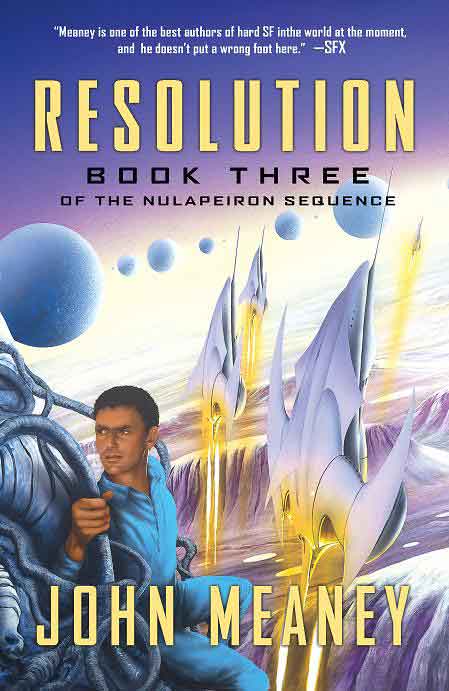
This time out, Spinrad is less than 100% about John Meaney, though it is worth noting that his criticisms of the work are more to do with what he sees as the marketing and economic realities of SF publishing today, which- as dictated by the major chains refusal to stock hardcover works with a price point over $25 - in his opinion force publishers to break works which should have been single mammoth tomes into a duology or trilogy format.

Spinrad says, "This presents the writer with a literary problem, it produces a paradox that is inherently impossible to resolve fully. To wit, do you presume that the only readership for books two and three are people who have already read book one--and worse, that the only readership for book three is those who have read the first two volumes? Or do you attempt to make each book a novel that anyone can pick up and read cold?"

Whichever way the author chooses to address these questions leads to compromise in Spinrad's estimation, though he acknowledges that Meaney "does as good and clever a job of bringing the reader who missed the first two up to date without turning off the reader who hasn't as perhaps can be done." Along the way he praises Meaney for certain courageous narrative choices and even gives him points for making good on a promise that Frank Herbert never lived to fulfill in his own Dune series. (So, I'm pretty happy with his overall assessment.)

Now, I cannot speak as to what editorial pressures might or might not have shaped the Nulapeiron Sequence as the work was already available from its UK publisher (Bantam/Transworld) before I came on the scene. It was then, and remains today, one of my favorite works of hard science fiction from the last decade. Nor have I read Peter F. Hamilton's duology, which Spinrad sees as suffering from the same problem. Though I must say Spinrad's assessment of Pandora's Star does pique my interest and turn me off for the very reason's he states. (I may end up adding it to the enormous reading pile eventually, however, being tipped over the edge by learning here that Hamilton uses the speculative device of interstellar railway lines connecting commuters across the stars via wormhole traversing trains - an idea which fascinated me when I first encountered it back in 1992 in Ben Aaronovitch's brilliant Transit, one of the best of the Doctor Who books from the Virgin line and a media tie-in work that managed that rare feat of being genuine speculative fiction. Come to think of it, Peter did look a bit like Colin Baker at Interaction last year. But I digress...)

Norman Spinrad does raise an interesting point, whether correctly or incorrectly applied in this case. I know that I would have much preferred Gene Wolfe's recent Wizard Knight as the single book which Locus insists on calling it. And I did pick up the SFBC's edition of Sean Williams's and Shane Dix's Geodesica, precisely because I wanted to read that work in its one intended volume. That and the collector that I am always prefer hardcovers to paperbacks. But it's hard to fault publishers when they are up against the realities of what the chains will or will not bear - I think we're all agreed that it's certainly better to publish a Gene Wolfe work in two volumes than not at all - and I couldn't truthfully promise you'd never, ever see such a contrived duology from Pyr. (None so far but never say never.) Nor is this phenomenon necessarily new - wasn't The Lord of the Rings originally conceived as one tome? Still, I'm curious about Spinrad's proposed alternative, as with his novel Russian Spring, which his French publisher elected to publish "as two volumes without hiding that this was one continuous novel and published them simultaneously. You could buy volume one and read it before you decided whether you wanted to go on, and if you did, you could buy the second volume immediately, or you could buy both at one time, or, in the case of Russian Spring, the two volumes in a fancy boxed set." Would such a solution work over here? I don't know, but it bears thinking about, and I'd love to hear some further discussion on the subject.

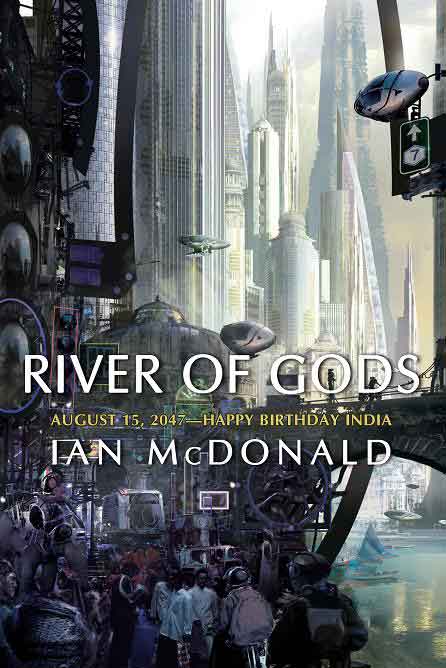
Meanwhile, I can't say I'm anything but absolutely thrilled with Spinrad's opinion that Ian McDonald's River of Gods is "a literary masterpiece." Spinrad writes that "I can't think of a better science fiction novel I've read in years.... This novel is a masterpiece of science fiction by any meaningful standard and even some that are not." Spinrad is certainly not the first to offer this sort of opinion, with the Washington Post proclaiming that River is "a major achievement from a writer who is becoming one of the best sf novelists of our time" and F&SF hailing the work as one of those once in a blue moon masterpieces like Neuromancer, Altered Carbon, or Perdido Street Station. Certainly, River of Gods is the book that has best plugged into the immediate zeitgeist (Charles Stross's Accelerando sequence being the previous holder of that honor, though I would place their greatest impact as when his tales appeared in their original Asimov's run as individual stories.) But it will be interesting to see if a) like Charlie's Accelerando narrative, River of Gods gives rise/calls attention to any similar global/nonWestern centric works in its wake, in the way that Charlie kick started the recent wave of Vingean Singularity fiction to the forefront, and b) if decades hence McDonald's masterpiece will indeed be remembered on a par with such classics as Dune, Stranger in a Strange Land, or Neuromancer. Time will shortly answer that first question but we'll have to wait a bit longer before we are sure of the latter.

9/7/06

Crooked Contest @ Pat's Fantasy Hotlist

A contest to win one of two copies of Sean Williams's The Crooked Letter, first volume of his Books of the Cataclysm series, starts today on Pat's Fantasy Hotlist. Here are the details. Good luck!

Pat says, "Pyr books are gradually making a very good name for themselves, with many of their releases pleasing fans and reviewers alike. As such, Pyr books are a welcome addition to the speculative fiction publishing world. Sean Williams' The Crooked Letter was brought to my attention by a number of positive reviews. To all ends and purposes, this novel appears to be something else, something special."

Well, we certainly agree. Sean's fantasy is quite extraordinary. As Hal Duncan (author of Vellum), has said, “Williams’s mix of grand metaphysical vision, weird landscapes and wild adventure makes for a great read, but it's the deeply human story at the heart of The Crooked Letter that really makes it something wonderful."

Meanwhile, Sean has uploaded some very fun photos from the World Science Fiction Convention, including shots of his visit to see Gary Numan playing at the House of Blues, the author of several Star Wars novels with a group of Stormtroopers, and this shot of Sean and Garth Nix in the Batmobile.

9/6/06

The Prodigal Comes Home

Lenora Rose, of the Green Man Review, has just posted a review of one of our earliest titles, Charles Coleman Finlay's wonderful The Prodigal Troll:

"Charles Coleman Finlay has made a name for himself already with a variety of experimental short stories and novellas that span almost every branch of fantasy and science fiction (many of which can now be found in his collection, Wild Things). His first novel, The Prodigal Troll, was highly anticipated and has been strongly lauded, and it's a book that I can recommend even as I can say that aspects of it were not to my own taste. Everything Charlie Finlay wanted to accomplish in this book he did, successfully. I was well intrigued by the prologue, and from part two onward, I was entranced by the story.... There's a sense of impending tragedy in the book, yet while the story is gritty, it's never entirely bleak. Maggot is courageous and resourceful and utterly himself, the people he meet prove to have more dimensions than he presumes when he meets them, and the choices he makes have the ring of truth. It's cliché to say I look forward to more from this author, but ... I really do."

9/5/06

Full Cover Spread for The Libery Gun

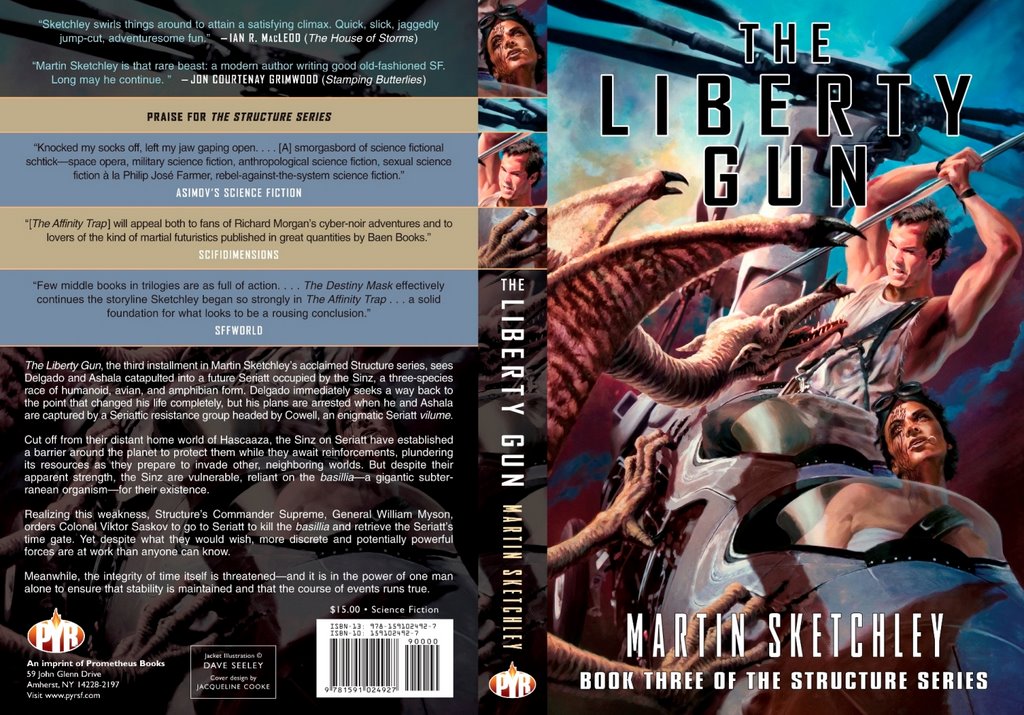
Because you can never have too much art, right? Here is the full cover spread for Martin Sketchley's The Liberty Gun, third and final (for now) volume of his three part Structure series (coming from Pyr in November). Artwork is by the wonderful Dave Seeley, layout & design by Jacqueline Cooke. Click to see the larger image.
Of Martin's deftly plotted action adventures, SciFiDimensions has said that it "will appeal both to fans of Richard Morgan’s cyber-noir adventures and lovers of the kind of martial futuristics published in great quantities by Baen Books.”

More Love for the Quake

William Lexner, on I Hope I Didn't Just Give Away the Ending:

"Infoquake describes a free-enterprise future that may be the most alarming yet, due to its sheer believability .... David Louis Edelman keeps the action coming at a breakneck pace, and despite the lack of SFnal tropes such as interstellar travel and space battles, Infoquake never lacks in excitement. The politics are fascinating, and the day-to-day juggling performed by corporate officers have never been so interesting .... The historical background mapped out by Edelman in the multiple appendices, along with the timelines provided show a world as rich with history as our own, and only rivaled in speculative fiction by J.R.R. Tolkien and perhaps George R.R. Martin. As a softcover first edition, Infoquake seems an obvious frontrunner in the race to win this years Philip K. Dick Award."

For Your Viewing Pleasure: Breakaway

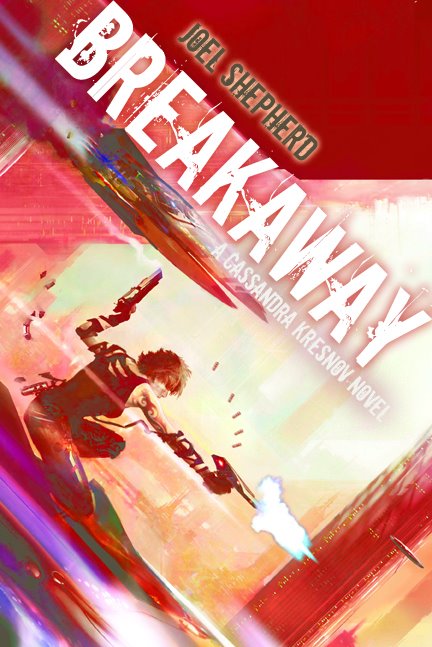
For your viewing pleasure, the front cover of Joel Shepherd's Breakaway, the second book in the Cassandra Kresnov series. The first book in the series, Crossover, was released this past August. It was described by Publishers Weekly thusly: "Set in the far future, Australian author Shepherd's energetic debut introduces Cassandra Kresnov, an experimental killer android-with-a-heart....Shepherd's intriguing heroine and strong female characters bode well for this projected series. Lacing Cassandra's search for identity and acceptance with plenty of hand-to-hand combat and racy sexual exploits, Shepherd also convincingly presents vividly realized ethical dilemmas....Shepherd grapples with some genuinely thought-provoking questions on the nature of humanity.”

Artwork is by the incomparable Stephan Martiniere, whose cover for the previous Cassandra Kresnov book, Crossover, was shown at the Hugo Ceremony when his nomination for Best Artist was read out. Design is once again by Prometheus' Jacqueline Cooke. Breakaway appears from Pyr in April, 2007.

For Your Viewing Pleasure: Keeping It Real

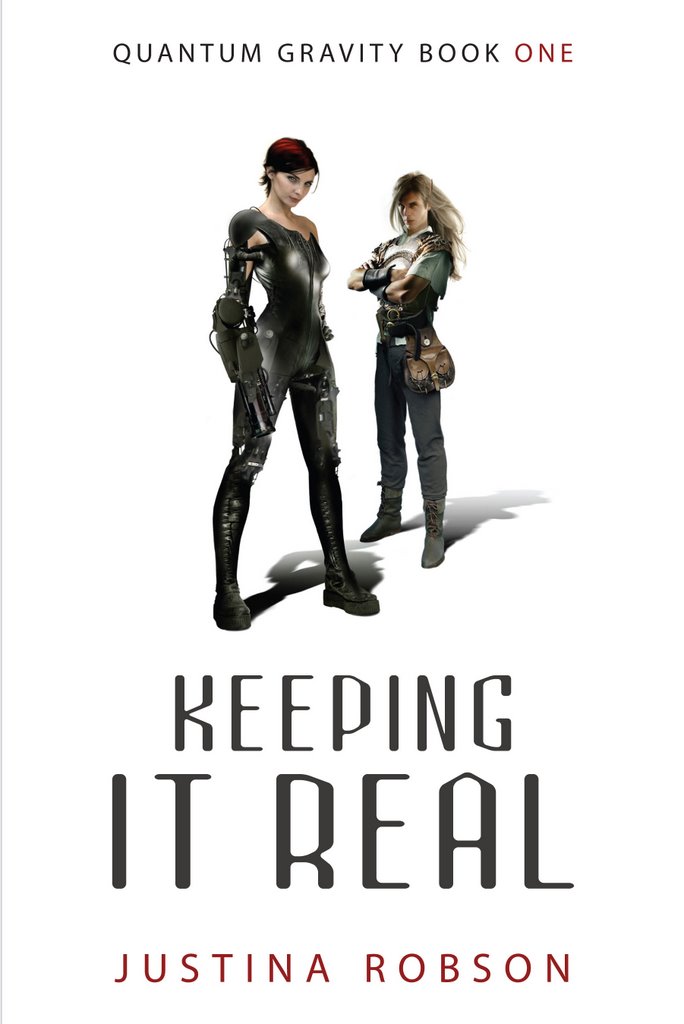
For your viewing pleasure, the front cover of Justina Robson's Keeping It Real: Quantum Gravity Book One. A tale of sex, elves and rock'n'roll, Keeping it Real has been described by SFWorld as "Justina ‘out to play’. And boy, does she have fun! So – think an enthusiastic melange of Laurell K. Hamilton’s Meredith Gentry, Tad Williams’ War of the Flowers, Anne Rice’s The Vampire Lestat, a touch of Marianne dePierre’s Parrish Plessis, even The Bionic Woman or Transformers, and you get an idea of how much fun this book is.”

Cover art is by the wonderful Larry Rostant, who also provided the cover for the UK edition. I loved the slick, Matrix-esque depiction of protagonist Lila Black in Larry's original image, but asked him if we could add an element to speak to the fantasy side of this sci-fantasy as novel as well. (I think the addition of rock star Zal sets up a nice sense of tension and expectation between the two figures. What do you think?) Meanwhilek, layout/design is by Prometheus's in-house artist Grace Zilsberger, making her Pyr debut. I love the clean, iconic layout she's come up with and look forward to working with her on many more Pyr covers.

Keeping it Real will be published in N. America in March, 2007. More exciting KIR news soon, I promise.

New Books by Robson & Meaney Out This Month

This month, we have two new books making their debut (and already spotted on the shelf at a local B&N). Coincidentally, both are tales of technological mind-control, albeit one is a techno-thriller set just around the corner from now and the other takes place in the future on a world far, far away.

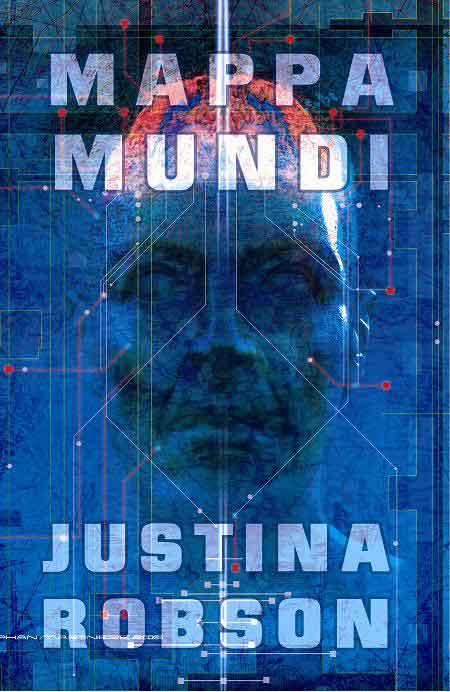
Justina Robson's Mappa Mundi is a novel of hard SF exploring the nature of identity both inherited and engineered, from one of Britain’s most acclaimed new talents. In the near future, when medical nanotechnology has made it possible to map a model of the living human brain, radical psychologist Natalie Armstrong sees her work suddenly become crucial to a cutting-edge military project for creating comprehensive mind-control. Meanwhile, on the other side of the Atlantic, Jude Westhorpe, FBI specialist, is tracking a cold war defector long involved in everything from gene sequencing to mind-mapping. But his investigation has begun to affect matters of national security—throwing Jude and Natalie together as partners in trouble—deep trouble from every direction. This fascinating novel explores the nature of humanity in the near future, when the power and potential of developing technologies demand that we adapt ourselves to their existence—whatever the price.

Publishers Weekly gave Mappa Mundi a starred review, saying, "Robson's third novel to appear in the U.S. ... maintains throat-tightening suspense from its teasingly enigmatic introduction of its major characters to its painful conclusion that evil will succeed if well-meaning people try to achieve good at any cost....Shortlisted for the 2001 Arthur C. Clarke Award, this near-future SF thriller presents convincing characters caught in profound moral dilemmas brought home through exquisite attention to plot details and setting."

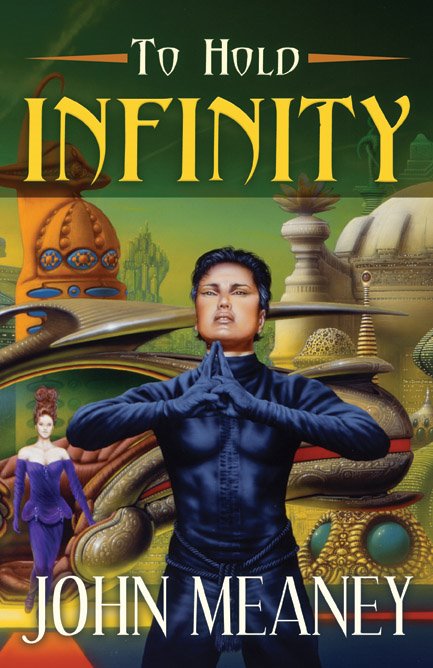
John Meaney's To Hold Infinity is a stand-alone novel set in the same universe as (but centuries before) his acclaimed Nulapeiron Sequence.

Devastated by her husband’s death, Earth-based biologist Yoshiko Sunadomari journeys to the paradise world of Fulgar to see her estranged son in the hope of bridging the gulf between them. But Tetsuo is in trouble. His expertise in mu-space technology and family links with the mysterious Pilots have ensured his survival — so far. Now he’s in way over his head — unwittingly caught up in a conspiracy of illegal tech-trafficking and corruption, and in the sinister machinations of one of Fulgar’s ruling elite: the charismatic Luculentus, Rafael Garcia de la Vega. When his home is attacked, Tetsuo flees to the planet’s unterraformed wastes, home to society’s outcasts and eco-terrorists.

So Yoshiko arrives on Fulgar to discover Tetsuo gone ... and wanted for murder. Ill at ease in this strange, stratified new world seething with social and political unrest but desperate to find her son and clear his name, she embarks on a course of action that will bring her face to face with the awesome, malevolent mind of Rafael.

Connie Willis says of John Meaney's To Hold Infinity: “Dazzlingly imagined and dazzlingly executed…this is a work of true uniqueness by a true talent. Wow!” Publishers Weekly claims that Meaney “...brings a bright lights/big city sensibility to the normally streetwise milieu of advanced neuro-tech.”

9/4/06

Miéville and King Comparisons for Williams

Two more favorable reviews for Sean Williams's The Crooked Letter.

JP at SFSignal describes the book as "Non-standard fantasy setting, loads of different deity figures, interesting premise," and says, "if you're looking for a good non-standard fantasy book, pick up The Crooked Letter." (Be warned, though, that there are some pretty big spoilers in his book description.)

Meanwhile, Neth Space calls Williams "an author to watch," and says Williams's writing is "as dark and gritty as a Miéville novel, as strange as Stephen King, and more accessible than either."

9/2/06

Stross and Gibson Comparisons for Edelman

Two more favorable reviews for David Louis Edelman's Infoquake.

Ryun Patterson of Bookgam offers a comparison to William Gibson's Neuromancer and says, "Infoquake is a triumph of speculation. Edelman has foreseen a nanotech future of warring corporations and stock markets of personal enhancement in which both the good and the bad of the present day is reflected with an even hand and startling clarity."

Meanwhile, JP at SFSignal gives Infoquake 4 1/2 stars. He sites similarities to Orson Scott Card and Frank Herbert and says, "A very strong debut novel mixing a historically detailed timeline with an intriguing technological future. David Louis Edelman makes reading about corporate shenanigans fun.... Edelman seems to be channeling Charlie Stross in his ability to imagine future tech and the consequences arising from its use."

And for those in Baltimore and Northern Virginia, David Louis Edelman will be making two appearances next week. On Tuesday, September 5, at 7:00 P.M., he will be making an appearance at the Barnes & Noble in White Marsh, MD to promote Infoquake. And on Thursday, September 7, at 7:30 P.M., he'll be reading and signing at the Barnes & Noble in Reston, VA.

Finally, David has uploaded a handful of photos to Flickr of the August 12 Infoquake launch party (featuring the world famous Infocake).

Meanwhile, I hope we can be forgiven for calling attention to this final line of the Bookgasm review, "Pyr is quickly becoming the standard by which all other sci-fi imprints are judged, and Infoquake is no exception. This book is billed as the first of a trilogy, and for once, that’s a good thing."